How Older Adults Can Get Started With Exercising
Staying active is an important part of healthy ageing. Regular exercise can help older adults maintain their strength, mobility, balance and independence, while also supporting their mental and emotional wellbeing.
For someone who hasn’t exercised for a while, however, getting started can feel difficult. This can be especially true when managing existing health conditions or changes that naturally come with age.
The good news is that exercise doesn’t have to mean spending hours in a gym. Simple, gentle activities such as walking, stretching, swimming or practising Tai Chi can be a great way to introduce more movement into everyday life.
At Hollborn Care Services, we understand that maintaining independence and wellbeing is an important part of supporting older adults. Here are some simple ways to get started with exercise safely and comfortably.
Why Is Exercise Important for Older Adults?
Regular physical activity can support many aspects of health as we get older.
Exercise can help maintain:
- Muscle strength
- Flexibility and mobility
- Balance and coordination
- Cardiovascular health
- Bone strength
- Independence with everyday activities
Staying active can also support mental wellbeing and help people feel more confident when carrying out daily activities.
Regular movement may also help people manage certain long-term health conditions, although the right type and level of exercise will depend on each individual's circumstances.
For older adults, maintaining strength and balance is particularly important because it can help reduce the risk of falls and support continued independence.
Gentle Exercises to Get Started
The best exercise routine is one that feels manageable and can become part of your regular routine. Here are some activities that may be suitable for older adults.
1. Walking
Walking is one of the simplest ways to become more active.
You can start with a short walk around your neighbourhood, garden or local park. As your confidence and fitness improve, you can gradually increase the length or pace of your walks.
You don’t necessarily need to complete one long walk each day. Several shorter walks throughout the day can also help you stay active and break up long periods of sitting.
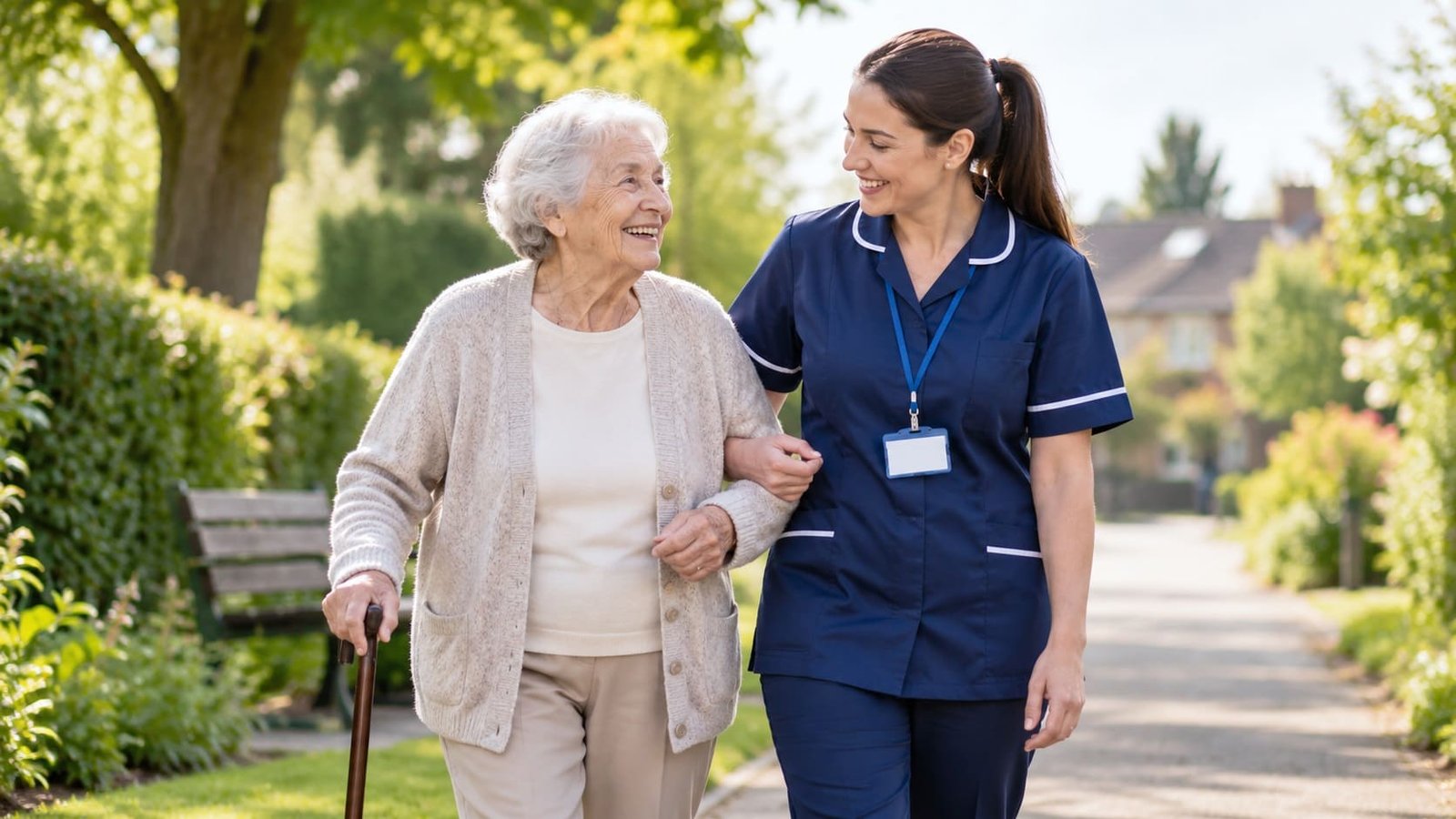
Walking with a friend, family member or care professional can also make the activity more enjoyable and provide additional encouragement.
2. Strength Exercises
Maintaining muscle strength becomes increasingly important as we age.
Simple strength exercises can help support everyday movements such as getting up from a chair, climbing stairs, carrying shopping or reaching for items.
You can start with light resistance bands or small hand weights. Everyday household items can sometimes be used too, although it’s important to make sure anything you use is safe and easy to handle.
Simple bodyweight movements, such as supported squats or sit-to-stand exercises, may also be useful.
If you are new to strength exercises, start gently and consider getting professional guidance on suitable exercises and techniques.
3. Yoga and Tai Chi
Exercise can benefit both physical and mental wellbeing.
Gentle forms of Yoga can help with flexibility and movement, while Tai Chi combines slow, controlled movements with breathing and mindfulness.
Tai Chi can be particularly useful for practising balance and coordination. It can also provide a relaxing form of physical activity.
Older adults may be able to join a local class or follow an appropriate guided session at home.
4. Swimming and Water-Based Exercise
Swimming and water-based activities can provide a gentle way to stay active.
The water supports the body and can make movement feel more comfortable, particularly for people who find some land-based exercises difficult.
Gentle swimming, water aerobics or walking in a swimming pool can provide opportunities to work on cardiovascular fitness, strength and mobility.
There’s no need to swim quickly. The aim is simply to find an activity that feels comfortable and enjoyable.
How Much Exercise Should Older Adults Do?
The amount of exercise someone needs will depend on their health, fitness, mobility and individual circumstances.
As a general guideline, adults aged 65 and over should aim for around 150 minutes of moderate-intensity physical activity each week.
This can include activities such as brisk walking, combined with muscle-strengthening activities during the week.
Balance and flexibility exercises can also be included as part of a well-rounded routine.
If you are currently inactive, reaching these levels immediately may not be realistic. Starting with small amounts of activity and gradually increasing them can be a much more manageable approach.
Even small increases in daily movement can be a positive step.
Staying Safe While Exercising
Safety should always be a priority when starting a new exercise routine.
Older adults should begin gradually and give their bodies time to adjust. It is important not to push beyond comfortable limits.
Some simple precautions include:
- Wear comfortable and supportive footwear.
- Drink enough water.
- Warm up before exercising.
- Cool down afterwards.
- Take regular breaks when needed.
- Increase activity gradually.
- Choose exercises appropriate for your current ability.
- Stop if you feel unwell or experience unusual pain.
If you have an existing medical condition, mobility concern or other health-related consideration, speak with your doctor or an appropriate healthcare professional before beginning a new exercise programme.
They can help you understand which activities are suitable and whether any modifications are needed.
Making Exercise Part of Everyday Life
Exercise doesn’t always have to feel like exercise.
There are many simple ways to introduce more movement into everyday routines. For example, you could take a short walk after a meal, spend time gardening, practise gentle stretches while watching television or choose to walk short distances instead of always using a car.
The key is finding activities that are enjoyable and realistic.
Having encouragement and support can also make it easier to maintain a routine. Family members, friends and care professionals can all play an important role in helping older adults stay motivated and active.
Supporting Independence Through Active Ageing
Being physically active can be an important part of maintaining independence as we get older.
Small, consistent activities can help support mobility, strength, confidence and overall wellbeing. The goal isn’t necessarily to exercise intensely — it is to keep moving in ways that are safe, comfortable and appropriate for the individual.
At Hollborn Care Services, we recognise that every person has different needs, abilities and preferences. Supporting wellbeing means looking at the individual as a whole and helping them maintain as much independence and choice as possible.
Whether it’s encouraging a short walk, supporting participation in an activity or simply helping someone incorporate more movement into their day, small steps can make a meaningful difference.
Start Small and Keep Moving
Getting started with exercise doesn’t need to be complicated.
A short walk, a few gentle stretches or a simple balance exercise can be a good beginning. Over time, these small activities can become part of a regular routine.
The important thing is to start at a comfortable level, stay consistent and choose activities that make you feel good.
With the right approach and appropriate support, staying active can be an enjoyable part of healthy ageing and everyday life.
Hollborn Care Services is committed to supporting older adults with compassionate, person-centred care that promotes independence, dignity and wellbeing.